


MetalMorphosis (2025)
Game Designer, Technical Artist, Programmer, Level Designer
A Cyberpunk Roguelike Game Where Flesh Meets Machine
Fight through a dystopian and dead world, acquiring cybernetic augments and upgrades wherever you can to persist despite your old, dying body.
This project was created during my third year with my team as part of a semester-long game development course. I was mainly responsible for Combat & Prop programming, system design, and the technical art aspects, including creating VFX and custom shaders.
Gameplay Video
Game Features
As a roguelike experience, MetalMorphosis features a modular augment system where each body part can be replaced with random upgrades. Every run offers new combinations, allowing players to experiment with unique builds and combat strategies.
Melee Augment
-
Chainsaw: Deals massive stagger to enemies and restores health on hit.
-
Claw: Successful melee hits build up energy, releasing it in an explosive burst on the 4th strike.
-
Hammer: Knocks back enemies with powerful impact.
Ranged Augment
-
Shotgun: Delivers heavy damage at close range but has a slow rate of fire.
-
Machine Gun: Rapidly increases fire rate for sustained attacks.
-
Sniper: Low rate of fire but extremely high damage. Bullets pierce through enemies and terrain.
Legs Augment
-
Poison Dash: Leaves toxic clouds along the dash path that continuously damage enemies that pass through.
-
Bomb Dash: Drops an bomb at the dash’s starting point. Shooting it triggers a powerful area-of-effect blast that deals massive damage.

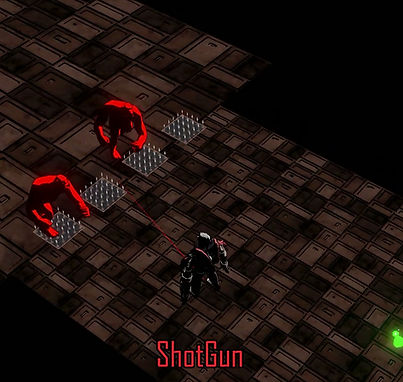
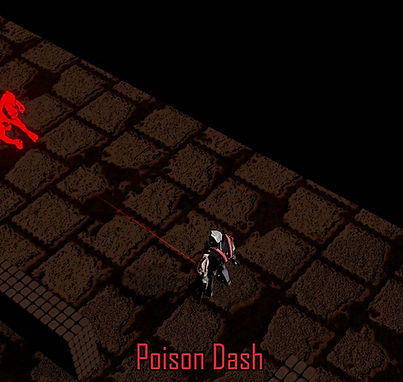
Design Starting Point
-
We initially picked "amortality" as the theme for the game, and aim for a high degree of customization & character building.
-
After deciding to create a roguelike game, we developed a detailed Project Plan outlining the key pillars that would guide our design and production process.


Project Plan - November 2024
Level Design Process
-
As the main level designer, the first challenge I faced was how to introduce the randomness expected from a roguelike game while working with limited development time and resources.
-
To ensure each run felt fresh without creating a large number of maps, I took inspiration from Hades, where difficulty is determined by enemy count and trap variety rather than map layout.
-
From this idea, I established our core design direction — “Monster Count is the Decisive Factor of Difficulty.”
I then defined the enemy count range and trap types for each difficulty tier, as well as made two example level scenes, then shared this design logic with the rest of the team to maintain a consistent level progression structure.

In Class Brainstorming - Jan 2025


Game White Box Level - Jan 2025

Programming - Character
I was responsible for implementing the base logic of the melee augments, which included coding the unique mechanics for each weapon type:
-
Chainsaw: Restores health on hit and applies heavy stagger to enemies.
-
Hammer: Knocks enemies back with a strong physical impact.
-
Claw: Builds up combo energy with each hit and releases an explosion on the fourth strike.

Chainsaw Prototype - Jan 2025

Hammer Prototype - Jan 2025

Claw Prototype (re-recorded) - Jan 2025
Programming - Traps
I also implemented and improved the trap system in the level.
The project featured three main trap types: Spike, Stun, and Meteor.
-
Spike: Originally part of the roguelike asset pack, its logic was flawed: the player always took damage when stepping on it, regardless of detection range. So I rewrote the script to include timed activation, proper hitbox detection, and added parameters such as damage type and target layers.


Spike Trap Rewrote - Feb 2025
-
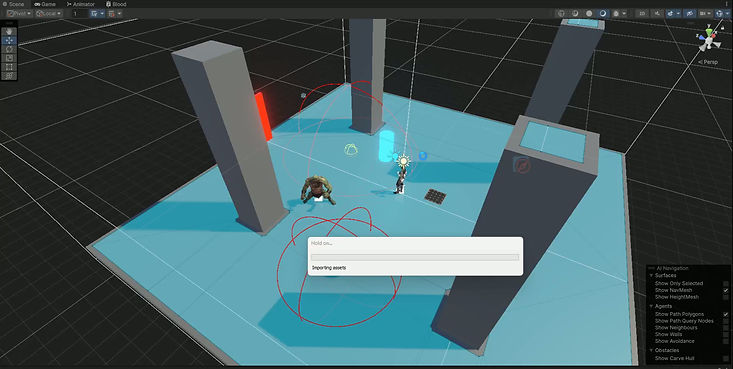
Meteor: An area trap that can be freely placed in the scene. It features adjustable parameters such as fall speed, spawn radius, and warning duration, with in-editor gizmos for clear visualization. This trap is designed to increase the overall difficulty and enhance the game’s post-apocalyptic atmosphere.

Meteor Trap Prototype - Feb 2025
-
Stun: A new implemented trap that will stun the player when triggered.It is the only non-damaging trap, designed to restrict player movement and add extra juice and tension to combat encounters.
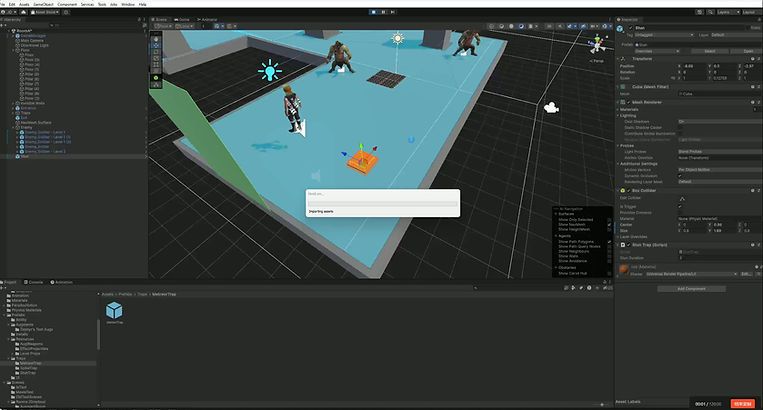
Stun Trap Prototype - Feb 2025

Art Reference - Nov 2024

ASE Shadergraph - Mar 2025
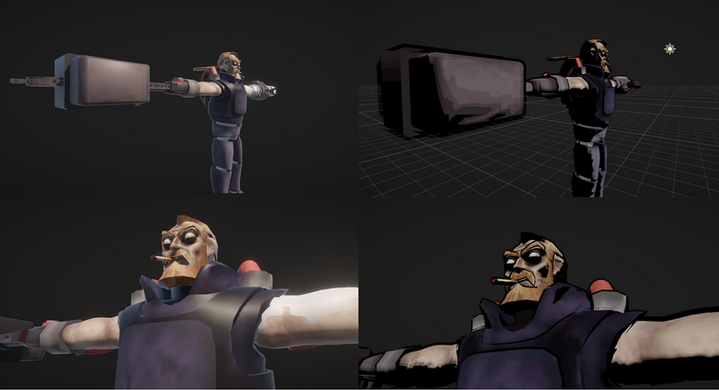
Character Model Before Shader & After - Mar 2025

Environment Asset Before Shader & After - Mar 2025
Tech Art - Shaders
This was my first time creating character and environment shaders from scratch. During early development, our team explored various art references, and one member mentioned the style of classic American comics. This aesthetic perfectly matched the project’s theme, so I designed the shader around that idea.
I created the entire shader using Unity’s Amplify Shader Editor (ASE).
Before that, I learned fundamental shading logic and visual effects through Shader Graph, which helped me understand node-based workflows before moving to ASE’s more flexible and customizable pipeline.
The shader is essentially a toon shader, but with several key differences:
-
Introduced smooth lighting transitions using SmoothStep instead of hard step thresholds.
-
Added multi-layered shadow control to create a richer and more natural stylized look.
-
Combined metallic and power control to achieve a semi-PBR hybrid style.
-
Included rim light and adjustable outline width for stronger comic-style contrast and visual depth.
After some adjustments to the Character Shader, I also applied it to several environment assets, and the results blended well with the overall visual style.
Tech Art - VFX
In addition to shaders, I also created several VFX applied to player abilities and environmental traps, adding extra juice and visual impact to the overall gameplay experience.
For these effects, I combined Shader Graph, Particle System, and VFX Graph, integrating the different techniques I had learned together to create the effects I wanted.
Blood OnHit VFX - Feb 2025

Character Healing & Augment VFX - Apr 2025

Meteor VFX - Apr 2025

Blood Shader Graph - Feb 2025

Healing VFX Graph - Apr 2025


Script to combine all the separate VFX for the meteor - Apr 2025
